Heel & Foot / READ
Why Are My Toes Curling? Hammer Toes, Claw Toes and Mallet Toes Explained
Podiatrist Anne Stewart explains why smaller toes curl, how hammer, claw and mallet toes differ, and how footwear, toe straps and props may help.
Toes that curl, rub against your shoes or develop painful corns are something I see regularly in clinic. People often notice their toes changing shape but aren’t sure why—or whether anything can help.
After 21 years in podiatry, my advice is to get those changes assessed early. There may be straightforward ways to make your toes more comfortable, reduce pressure and help you keep enjoying your usual activities.
The starting point is understanding which joints are affected and whether the toe is still flexible.
What Is the Difference Between a Hammer Toe, Claw Toe and Mallet Toe?
These conditions can look similar, so you don’t need to work out the diagnosis before booking an appointment.
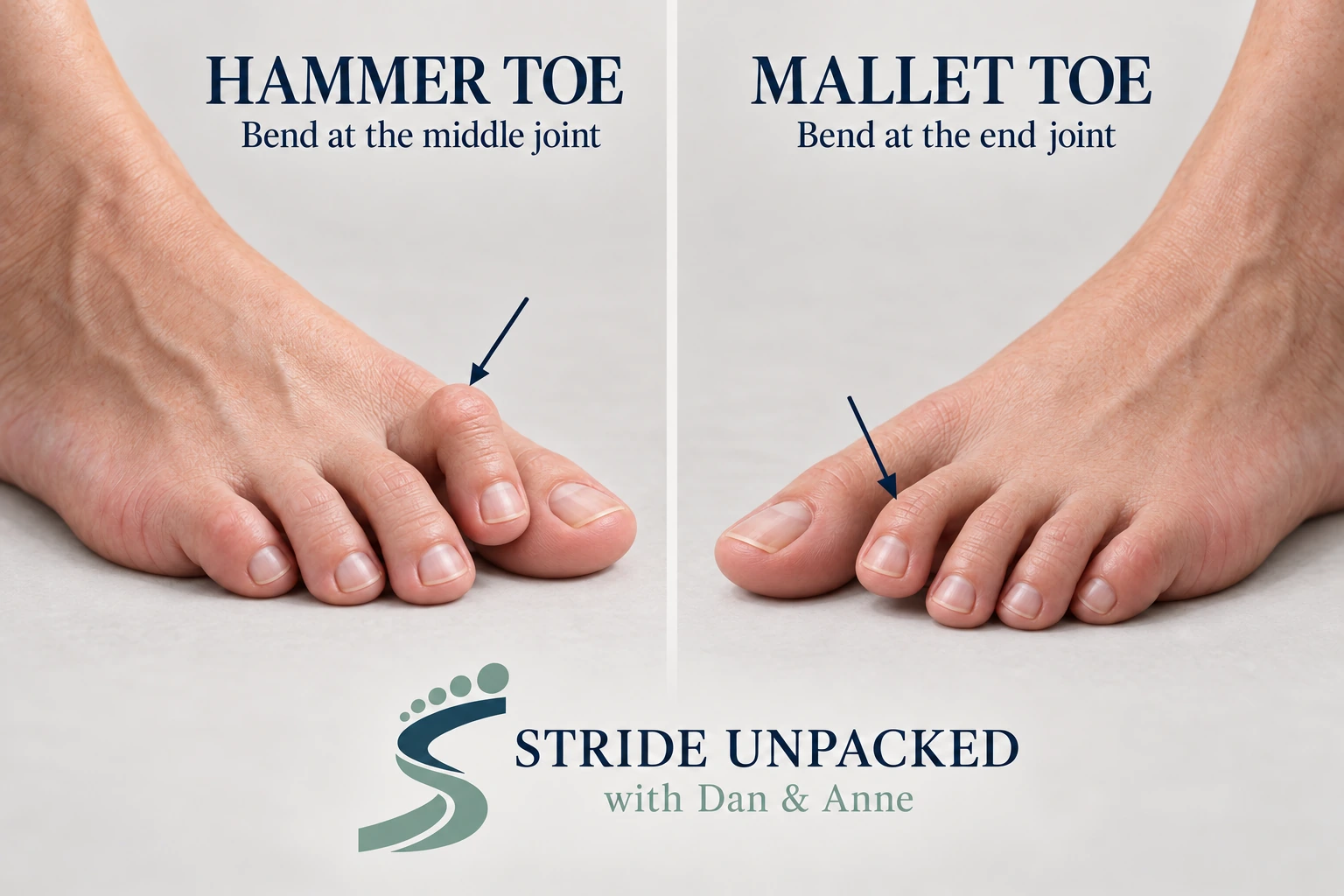
A hammer toe bends at the middle joint, which becomes more prominent above the surrounding toes. I commonly see this in the second, third or fourth toe. The raised joint can rub against footwear, while the tip may also experience increased pressure. [1]
A mallet toe bends at the joint nearest the toenail, making the end of the toe point downwards. In clinic, I often see this affecting the second toe, particularly when it is longer than the big toe.
A claw toe lifts upwards where it meets the foot, while the middle and end joints bend downwards. This gives the toe its curled appearance and can concentrate pressure at the tip. [2]
The name matters for diagnosis, but the practical questions are: where is the pressure, how much movement remains, and what can we do to help?
Why Do Toes Start to Curl?
There isn’t one cause that explains every patient’s toes.
Changes in the balance between the muscles and tendons that move the toes can affect their position. Tight or narrow footwear, high heels, previous injuries and conditions such as arthritis can also contribute.
Diabetes can play a part when it causes nerve damage. This may affect the small muscles in the foot and contribute to the imbalance associated with clawing. However, curling toes do not automatically mean someone has diabetes. [2]
That’s why I want to understand the person’s medical history as well as look at the toe itself.
Why Do Curled Toes Develop Corns and Hard Skin?
When a toe changes position, it changes where pressure falls.
A raised joint may rub against the top of the shoe. A downward-pointing toe may press into the ground or the inside of the shoe at its tip. I sometimes also see pressure-related hard skin beneath the toenail.
Treating a corn can relieve discomfort, but we also need to address the pressure that caused it. Otherwise, it may keep returning.
I explain this in more detail in my article on painful corns on the end of the toe.
How Do You Check Whether a Toe Is Flexible or Fixed?
During an assessment, I look at the toe’s position and gently move the joints with my hands.
A flexible toe can still be moved towards a straighter position. A fixed toe has become stiff and cannot readily be straightened.
This helps guide the treatment. I wouldn’t approach a mobile hammer toe in exactly the same way as a rigid claw toe, and I wouldn’t try to force a stiff joint straight.
I also look at where the skin is under pressure and how the toe sits inside the patient’s footwear.
Can Toe Straps Help?
For an appropriate flexible toe, particularly a mobile hammer toe, I may recommend a toe-straightening strap.
One option I use in clinic is a reusable fabric strap with a Velcro fastening. It loops around the affected toe and fastens to a neighbouring toe. The version I use is washable and can be removed and reapplied.
The aim is to improve the toe’s position while the strap is being worn, helping reduce rubbing or pressure at the tip.
It isn’t a promise of permanently straightening the toe. Suitability and fit matter, and the strap should not cause discomfort, rubbing or constriction. I would show a patient how to use the particular device I recommend.
When Would You Recommend a Toe Prop Instead?
If a clawed toe is more fixed, I often consider a leather or silicone toe prop.
This sits beneath the curled toes, supporting the space underneath them and helping redistribute pressure away from their tips.
The aim is comfort and pressure relief. It does not force a rigid toe straight.
The right size matters, and there must be enough room in the shoe for both the toes and the device. Something intended to relieve pressure shouldn’t create a new pressure point elsewhere.
If you have diabetes, poor circulation or reduced feeling in your feet, get professional advice before trying straps or padding yourself. [1]
What Should I Look for in Footwear?
My first recommendation is enough space around the toes—not just width, but also depth and length.
A shoe can be wide enough across the foot yet still press down on a raised toe joint.
When helping patients choose footwear, I suggest:
- A roomy, rounded toe box: avoid shapes that squeeze the toes together.
- Enough depth: raised joints need space above them.
- Enough length for the longest toe: this isn’t always the big toe.
- A lower heel: particularly if higher heels push the toes into the front of the shoe.
- Adjustable fastenings: laces or straps can help secure the foot and accommodate changes in fit.
I also suggest shopping later in the day, when feet may have swollen.
Most importantly, shoes should feel comfortable when you try them on. Some materials soften with wear, but don’t rely on “breaking them in” to solve a shoe that squeezes or rubs.
As I tell patients: if they don’t make you want to skip around the shoe shop, keep looking.
Can Exercises Straighten Curled Toes?
I sometimes recommend stretching and strengthening exercises, depending on the movement available and what I find during assessment.
They may help maintain mobility and improve muscle function, particularly when the toes remain flexible. However, exercises should be tailored to the person. I wouldn’t promise that they will straighten a fixed toe or reverse established joint changes.
The aim is useful, comfortable movement—not forcing the toes into a position they cannot tolerate.
Does a Hammer Toe or Claw Toe Need Surgery?
Not necessarily.
I prefer to explore early assessment, footwear changes and suitable aids before treating surgery as the automatic next step.
Surgery may be considered when pain or pressure problems persist despite appropriate nonsurgical care. The decision depends on the toe, the symptoms and the person’s wider health.
It also isn’t an instant fix: recovery and the possible benefits and risks need a proper discussion with the surgical team. [1]
When Should I Get Advice?
If you notice your smaller toes changing shape, I recommend an assessment with an HCPC-registered podiatrist, especially if they are rubbing, becoming painful or developing corns.
You don’t need to wait until walking becomes difficult.
Seek urgent advice if you notice broken skin, unexplained bleeding, discharge, or new redness and swelling—particularly redness spreading from the toe towards the foot. Contact your podiatrist or diabetic foot team promptly; if they are unavailable, contact your GP or NHS 111 rather than waiting for a routine appointment.
If you have diabetes or reduced sensation, check your feet every day. A problem may not hurt even when it needs attention. [3]
What Is the Main Thing You Want People to Remember?
You don’t have to know whether you have a hammer toe, claw toe or mallet toe before asking for help.
What matters is noticing the change and finding out what is causing the pressure. A better-fitting shoe, a suitable strap or a toe prop may make a worthwhile difference—but the right choice depends on your toes.
My aim is to help you walk comfortably and keep doing the things you enjoy.
Products Mentioned
We prescribe, sell and recommend these products in clinic. We have no commercial relationship with their manufacturers.
Advertisement — Amazon affiliate links. As an Amazon Associate, we earn from qualifying purchases.
View the Fabric Toe-Straightening Strap on Amazon
View the Chamois Leather Toe Prop on Amazon
View the Silicone Toe Prop on Amazon
The right option depends on your toe position, flexibility and footwear. Ask your podiatrist which is suitable for you.
Keep Building Your Understanding
Read why painful corns keep coming back, or explore our foot and lower-limb guides.
This article provides general information and does not replace an individual assessment, diagnosis or treatment plan. Seek professional advice about new symptoms or changes in your feet. Read our health information disclaimer.
Sources & further reading
This is general education, not a personal diagnosis or an individual treatment plan. Read our health information disclaimer.