Heel & foot / READ
Stretches for Plantar Fasciitis: What Helps and How to Do Them
Plantar-fascia stretches, calf stretches and a few optional additions: Dan Broadhead explains what he uses in clinic, how to keep them comfortable, and why stretching is only part of rehabilitation.
Does stretching help plantar fasciitis?
Stretching is commonly recommended for plantar heel pain, and there is evidence behind it. The 2023 clinical practice guideline recommends plantar-fascia-specific and calf stretching to improve pain and function. It also recommends resistance exercises for the foot and ankle. [1]
In my practice, I use stretching as one part of rehabilitation. It can help with symptoms and relevant movement restrictions, but I do not rely on it alone to prepare someone for the demands of walking and running.
I place particular emphasis on progressive strengthening, including appropriately adapted heel raises. Stretching can sit alongside that work.
For the strengthening side of the programme, read our guide to heel raises for plantar fasciitis.
Before you start: what should a stretch feel like?
A stretch should feel gentle and comfortable, rather than painful.
Ease off if discomfort becomes pain. Stop if you develop burning, tingling, shooting pain or other unfamiliar symptoms, and seek advice. These are not sensations I would ask someone to push through.
Use a stable support where needed. A fixed worktop or wall is preferable to furniture that could slide or tip.
These instructions are intended for people whose symptoms have been assessed as plantar fasciitis or plantar fasciopathy. They are not a way to establish the diagnosis. Suspected nerve involvement or another cause of heel pain needs its own assessment.
If you are unsure what is causing your symptoms, start with our guide to first-step heel pain.
How to stretch the plantar fascia
I use either a standing or seated version, depending on the person’s comfort, balance and big-toe movement. Choose one version; you do not need to perform both.
My usual starting prescription is a 10–15-second hold, repeated three to five times, once daily.
Standing version
- Face a wall and use your hands for balance.
- Position the toes of the foot you are stretching against the wall, with the toes gently bent upwards and the ball of the foot and heel on the floor.
- Lean forwards slightly until you feel a comfortable stretch beneath the foot.
- Hold without bouncing, then ease out of the position.
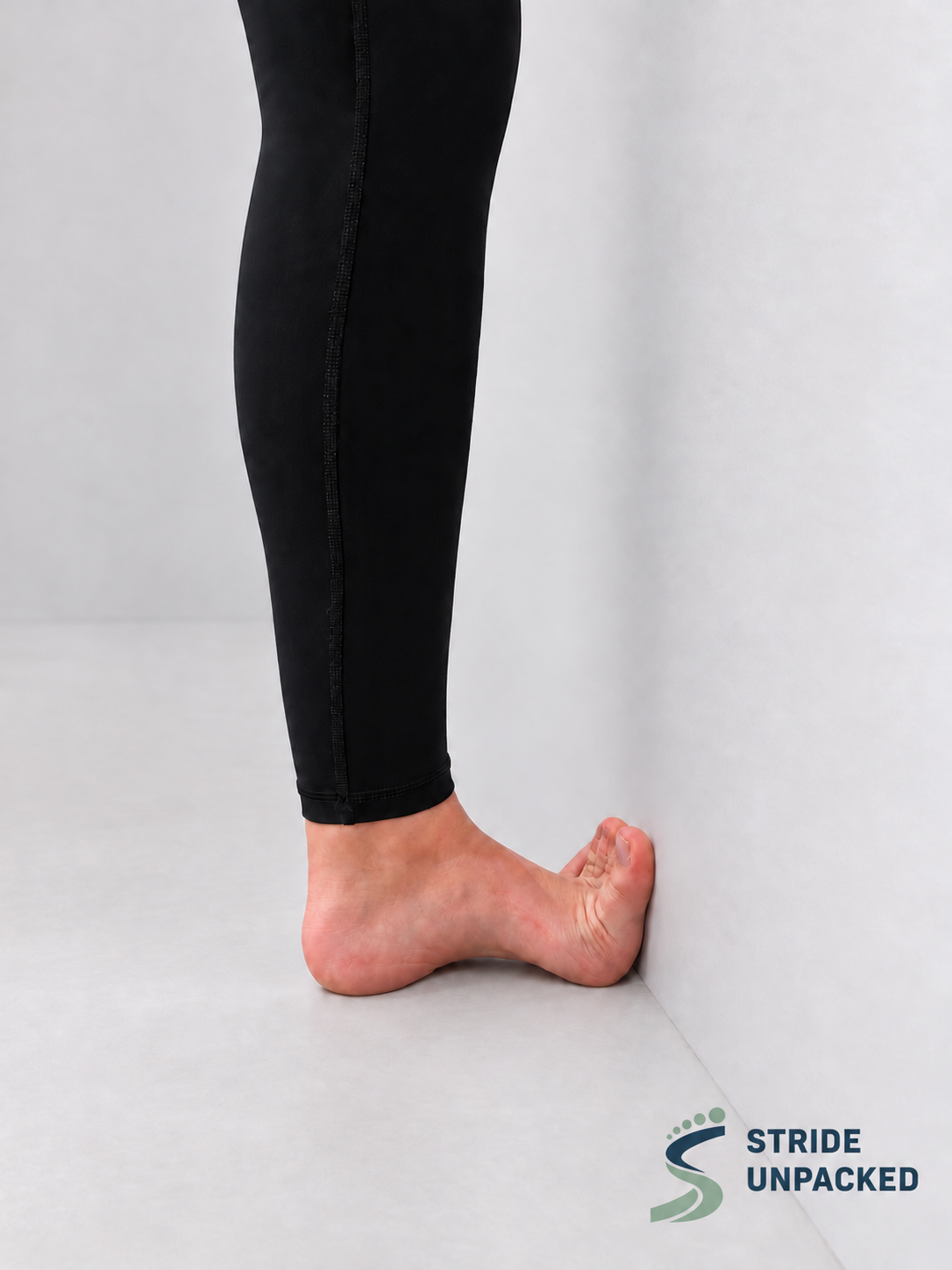
Standing plantar-fascia stretch: keep the heel grounded and raise the toes gently against the wall. Use a stable support for balance.
Do not force the toes upwards or lean further simply to create a stronger sensation.
This position also places tension on other structures beneath the foot. It may be uncomfortable or unsuitable if you have hallux limitus or hallux rigidus—a restricted or stiff big-toe joint. In those cases, I would assess and adapt the exercise rather than ask you to push through joint pain.
Seated version
- Sit securely and bring the foot within comfortable reach, resting it across the opposite thigh if that is manageable.
- Support the foot with one hand.
- With the other hand, gently bring the toes upwards towards the shin until you feel a comfortable stretch along the sole.
- Hold, then release slowly.
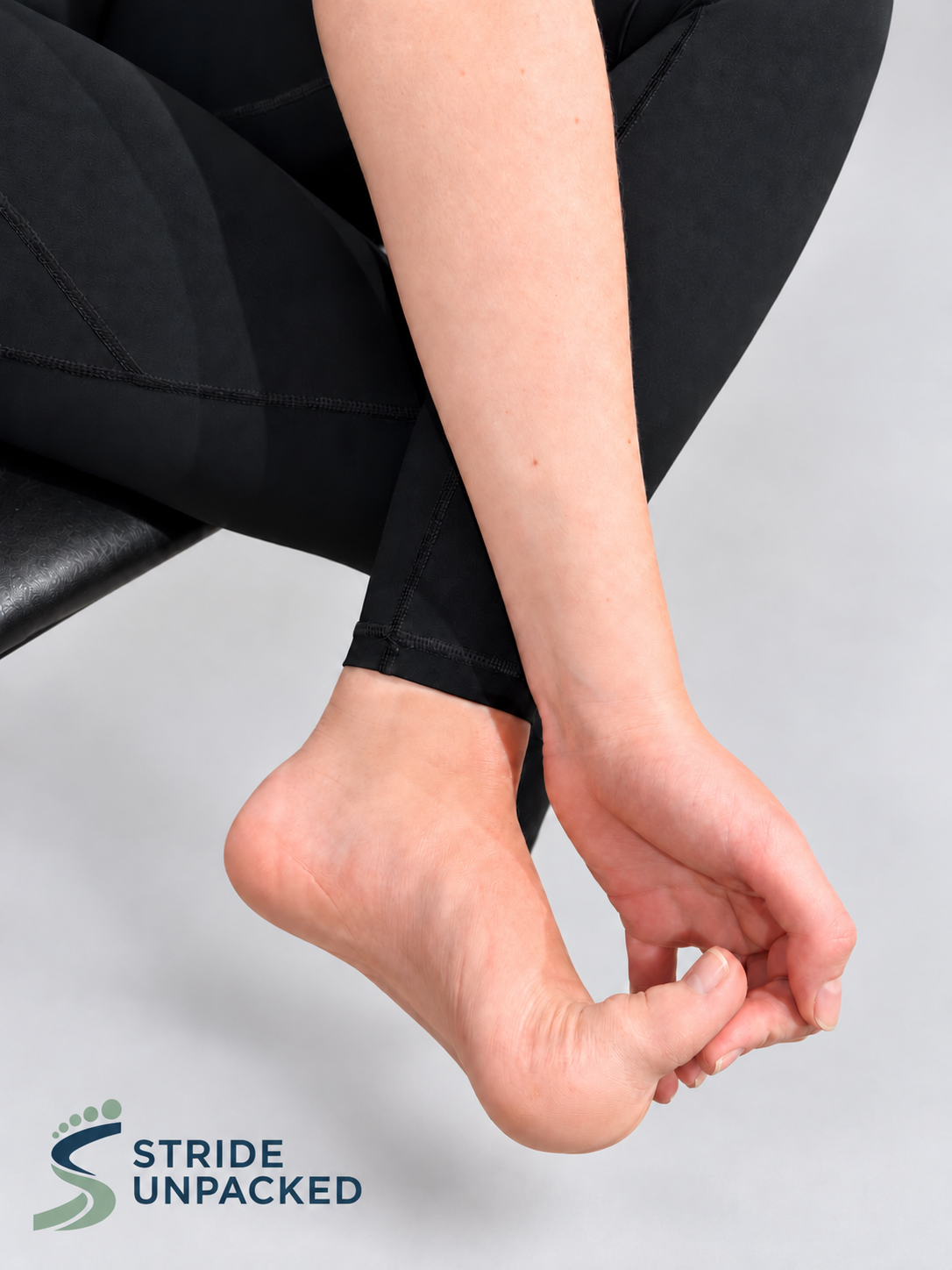
Seated plantar-fascia stretch: gently bring the toes upwards into a comfortable stretch without forcing the movement.
The seated version gives you more control over the movement, but it should still be adapted if bending the toes hurts.
How to stretch the calf with a straight knee
This version emphasises the gastrocnemius, one of the main calf muscles.
- Place both hands against a wall or on a fixed worktop.
- Step one foot backwards, keeping both feet pointing forwards.
- Keep the back knee straight and the back heel on the ground.
- Bend the front knee and move your weight forwards until you feel a gentle stretch in the calf of the back leg.
- Hold, then change sides.
My usual starting prescription is 10–15 seconds, three repetitions on each side, once daily.
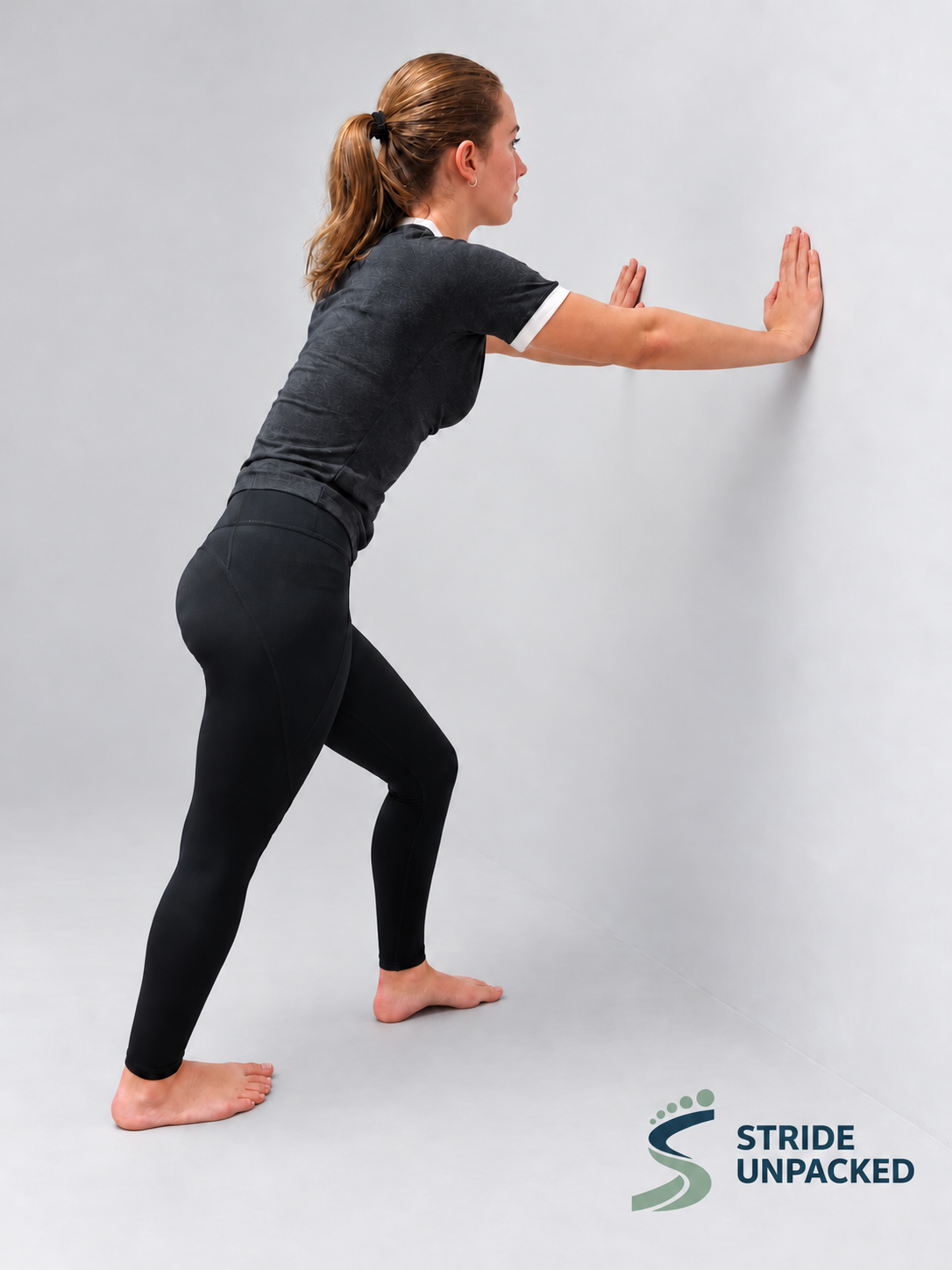
Straight-knee calf stretch: use the wall for support, keep the back knee straight and the back heel grounded.
The gentle toe-press cue I sometimes use
While the patient holds the position, I sometimes ask them to gently press the big toe and smaller toes of the back foot into the floor.
This is a light press—not a toe curl, a forceful push or an attempt to rise onto tiptoes. Keep the heel down.
It is a cue I use in clinic, rather than an essential part of every calf stretch or a separately proven treatment for plantar fasciitis. Omit it if it causes discomfort or makes the position difficult to maintain.
How to stretch the calf with a bent knee
Bending the knee changes the emphasis towards the soleus, the deeper calf muscle.
- Begin in the same supported position, with one foot behind the other.
- Keep the back heel on the floor.
- This time, gently bend the back knee and move it forwards over the foot.
- Stop when you feel a comfortable stretch, often lower down in the calf.
- Hold, then change sides.
My usual starting prescription is 10–15 seconds, three repetitions on each side, once daily.
You do not need to bend deeply. Keeping the heel grounded and the movement comfortable matters more than how far you move.
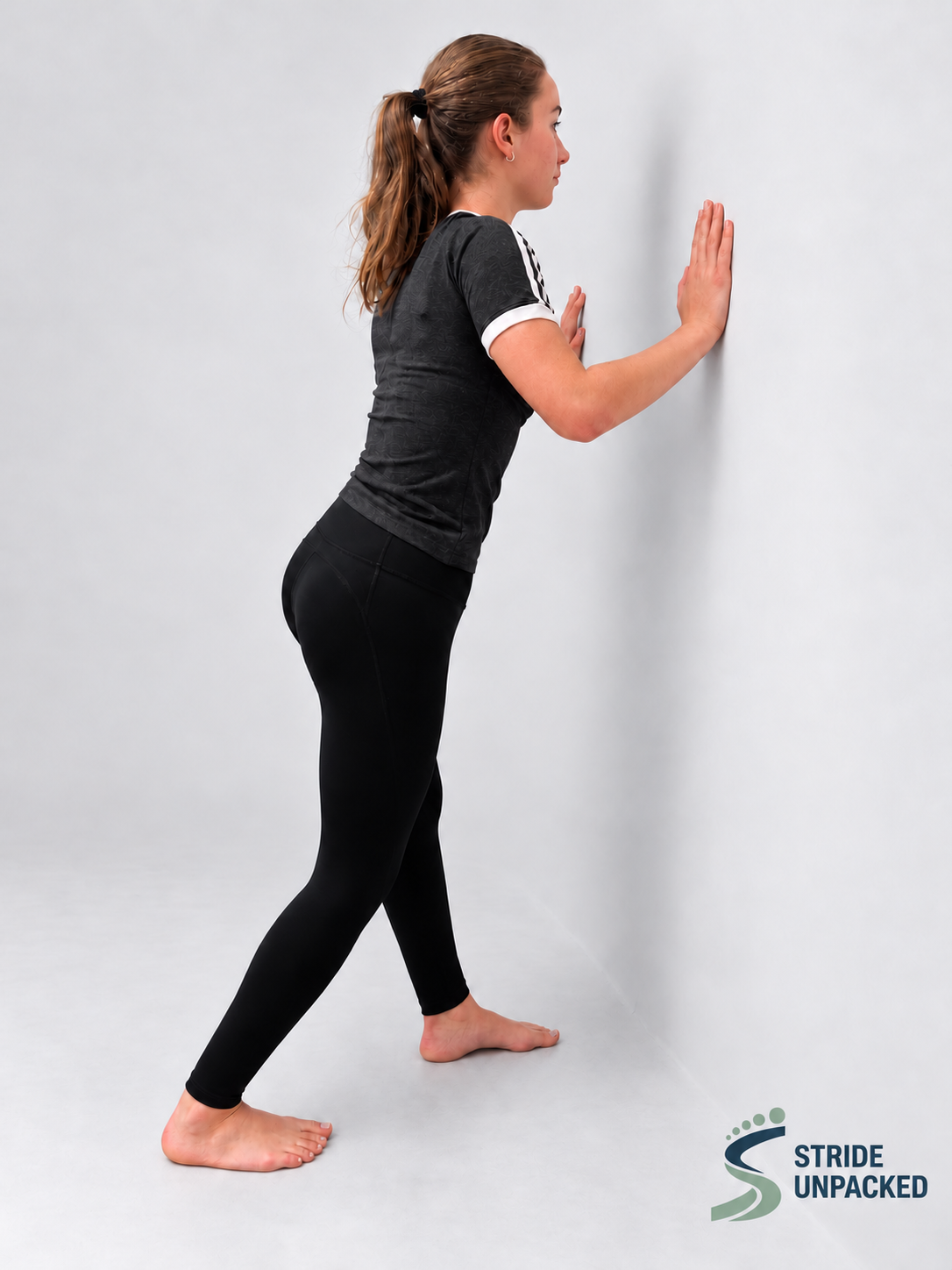
Soleus stretch: use the wall for support, gently bend the back knee and keep the back heel grounded.
A knee-to-wall alternative
- Face a wall with the foot you are stretching a short distance away.
- Use the wall for support.
- Keeping the heel down, gently move that knee forwards towards the wall.
- Adjust the distance until you feel a comfortable stretch without lifting the heel or forcing the movement.
Touching the wall is not the goal. Find a position that gives you a gentle stretch and use the same timing as above.
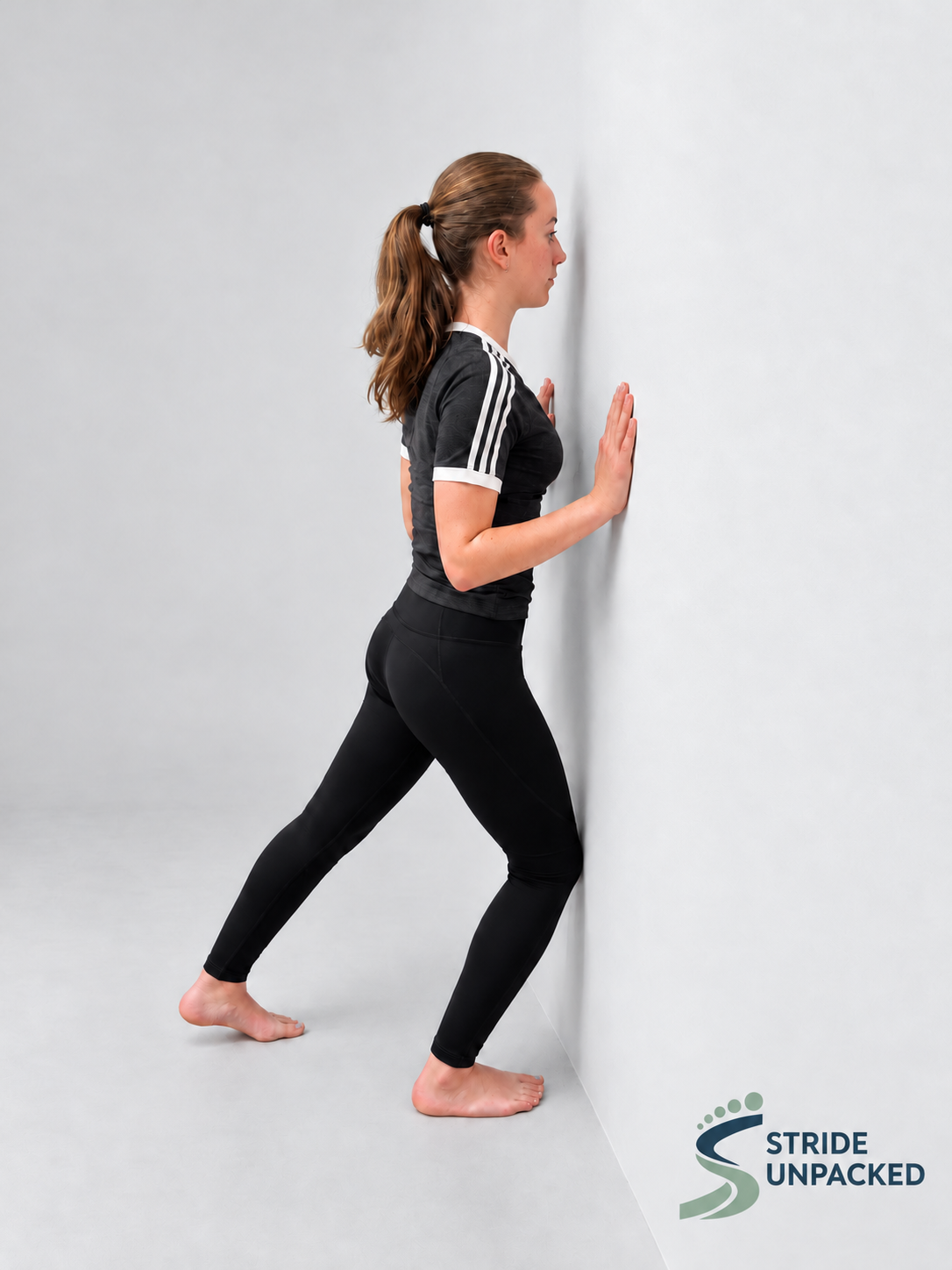
Knee-to-wall soleus stretch: the front leg is the one being stretched. Gently move that knee towards the wall while keeping the front heel grounded.
Do I also need hamstring and glute stretches?
Not necessarily.
During an assessment, I look at movement and range of motion beyond the foot. Some people may benefit from additional stretches around the thigh or hip; others have no relevant restriction there.
These are optional, assessment-led additions in my practice. They do not have the same direct guideline support for plantar fasciitis as plantar-fascia-specific and calf stretching.
If time is limited, these are usually the stretches I would leave out first.
For each optional stretch below, my usual prescription is a 10–15-second hold, repeated three times, once daily.
Hamstring stretch
For a standing version:
- Use a stable support if needed.
- Put one leg slightly in front, with the heel on the floor and the knee comfortably straight.
- Bend the supporting leg slightly.
- Hinge forwards gently from the hips until you feel a comfortable stretch in the back of the thigh.
- Hold, then change sides.
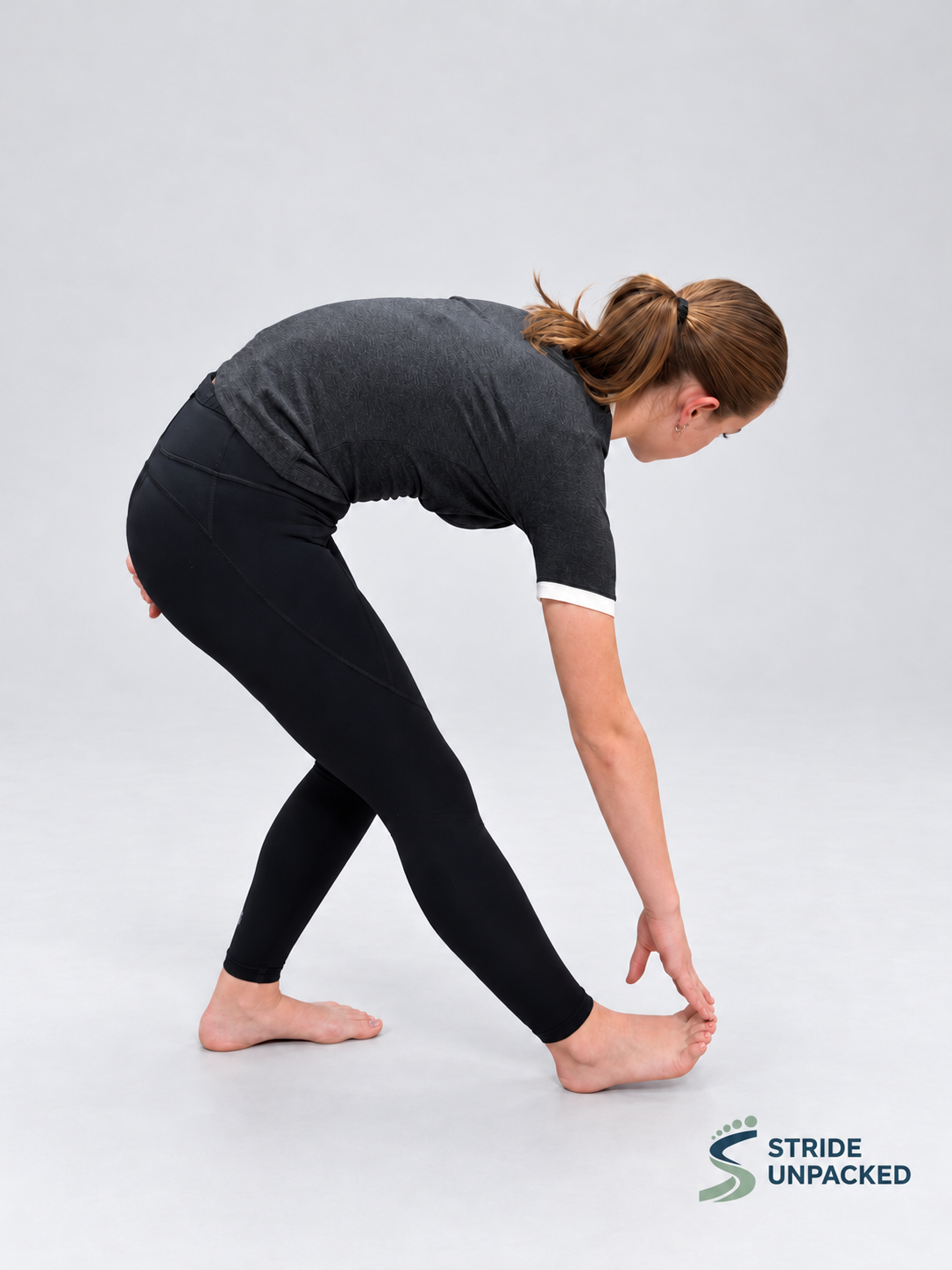
Standing hamstring stretch: keep the front heel supported and hinge gently from the hips. There is no need to touch your toes; use a stable support if needed.
For someone with balance or mobility difficulties, I may use a seated version:
- Sit towards the front of a stable chair.
- Extend one leg in front, with the heel supported on the floor.
- Hinge forwards gently from the hips until you feel the stretch in the back of the thigh.
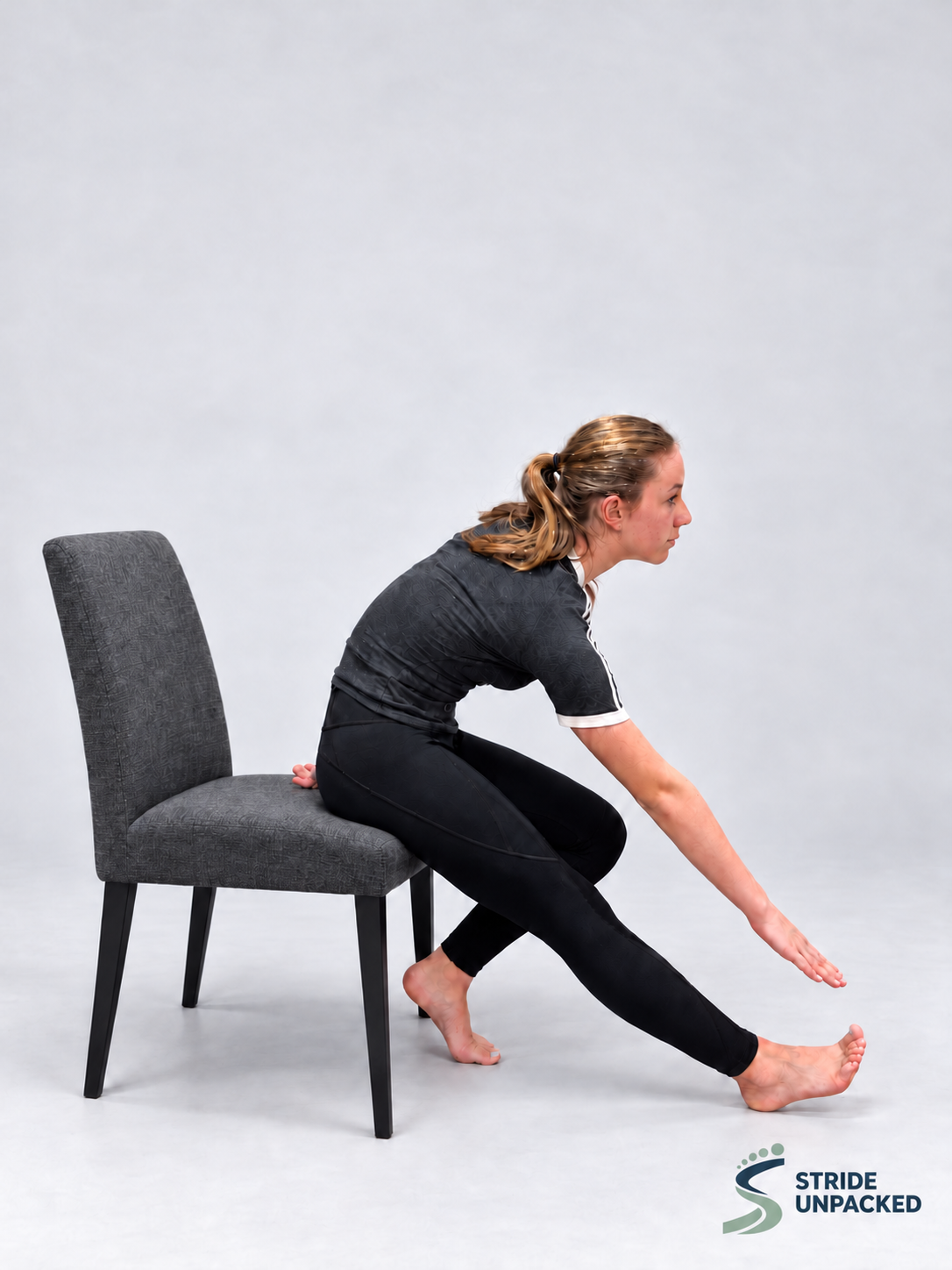
Seated hamstring stretch: support the heel on the floor and gently hinge forwards from the hips. You do not need to reach your toes.
Bringing the toes upwards may add a calf stretch. If that prevents you from finding a comfortable thigh stretch, relax the ankle instead.
Do not pull harder into tingling, burning or pain travelling down the leg. Those symptoms need a different assessment.
Knee-to-chest glute stretch
- Lie comfortably on your back on a supportive surface.
- Bend one knee and gently bring it towards your chest, leaving the other leg in a comfortable position.
- Support the bent leg with your hands, holding behind the thigh if gripping around the knee is uncomfortable.
- Stop when you feel a gentle stretch around the buttock.
- Hold, release slowly and change sides.
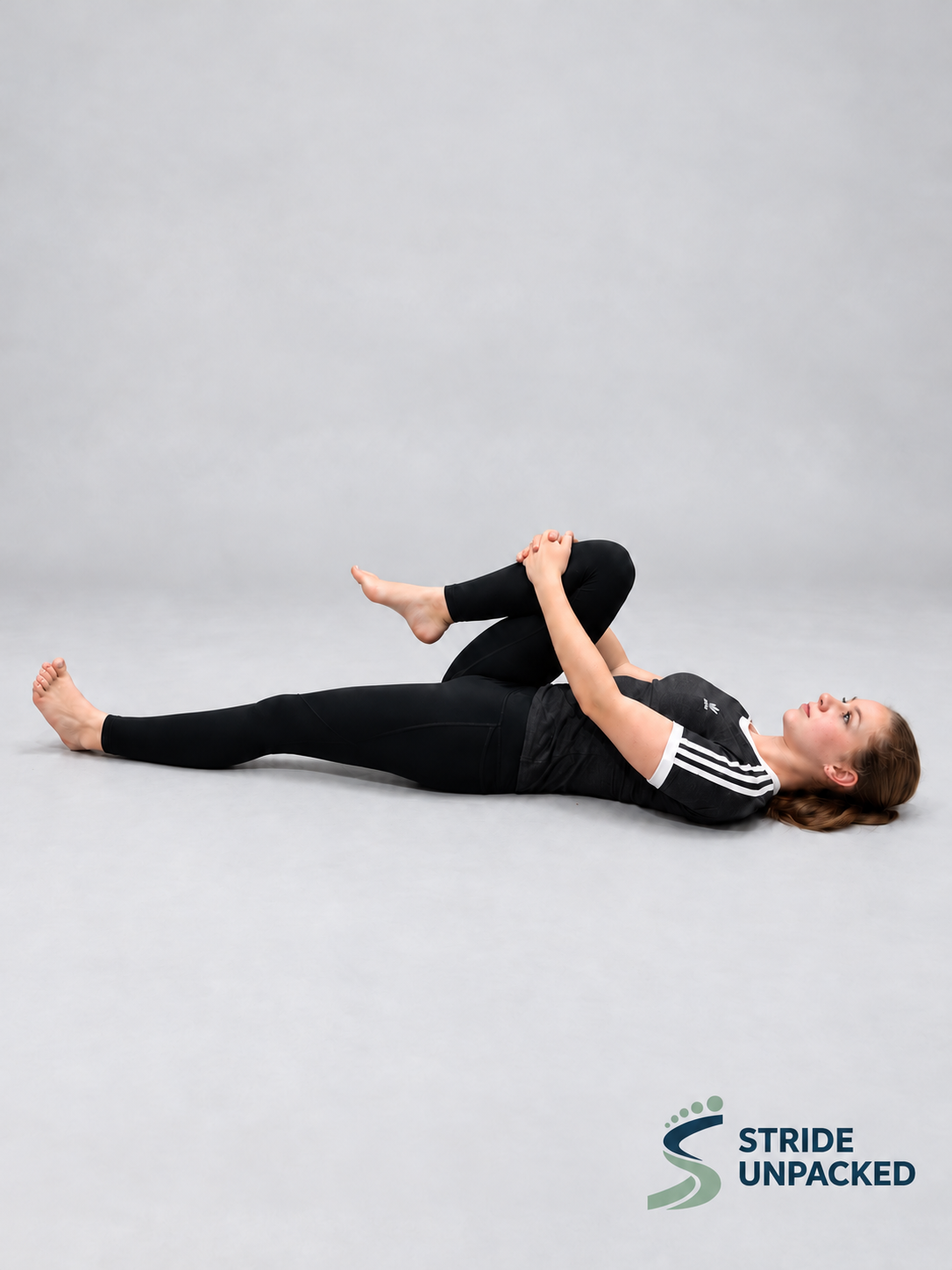
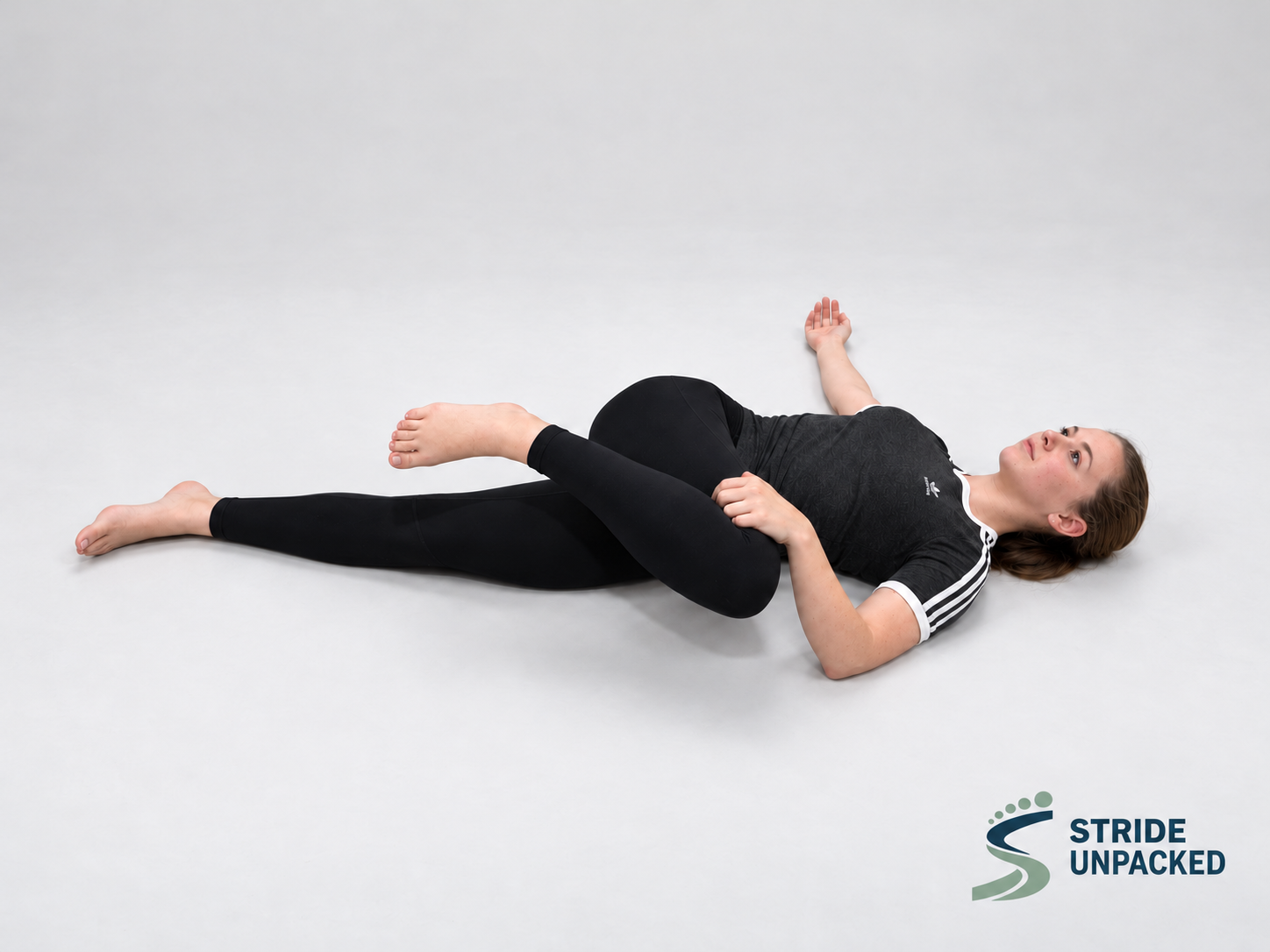
Knee-to-chest glute stretch: gently bring one bent knee towards your chest, keeping the movement comfortable.
Avoid pulling into pain at the hip or knee.
Cross-body glute stretch
- Lie on your back.
- Bend one knee and gently guide it towards the opposite side of your body.
- Keep your shoulders comfortably supported.
- Move only far enough to feel a gentle stretch around the buttock or outer hip.
- Hold, release slowly and change sides.
Cross-body glute stretch: gently guide the bent knee towards the opposite side, keeping the shoulders comfortably supported and avoiding a forced twist.
This movement can also rotate the lower back. Do not force the knee towards the floor or continue if it causes back, hip or travelling leg pain.
How much stretching should I do?
Here is my usual starting approach:
- Plantar fascia, standing or seated: hold 10–15 seconds, repeat 3–5 times, once daily.
- Straight-knee calf: hold 10–15 seconds, repeat 3 times per side, once daily.
- Bent-knee calf or knee-to-wall alternative: hold 10–15 seconds, repeat 3 times per side, once daily.
- Optional hamstring or glute stretches: hold 10–15 seconds, repeat 3 times per side, once daily if prescribed.
This is my clinical starting prescription, not a claim that this exact dose is best for everyone. Your clinician may recommend a different duration or frequency.
A stronger stretch is not automatically a better stretch. If the programme repeatedly aggravates your symptoms, have it reviewed rather than simply pushing harder.
Why stretching should sit alongside strengthening
Stretching and strengthening serve different purposes within a rehabilitation plan.
A comfortable stretch may help symptoms or a relevant movement restriction. Progressive resistance exercises provide a different challenge to the foot and calf.
In clinic, I consider both according to the person’s needs. I also review their everyday activity, footwear and response to treatment.
You do not need a long list of exercises simply because you have plantar fasciitis. You need a manageable programme with a clear purpose.
Our heel-raise guide explains one strengthening approach and how it can be adapted.
When should I get advice?
Stop and seek advice if stretching causes unfamiliar symptoms, particularly burning, tingling or shooting pain.
Have the programme reviewed if stretches repeatedly worsen your usual heel pain, if a stiff or painful toe joint prevents the movement, or if you are unsure whether the exercise is appropriate.
NHS guidance recommends assessment if heel pain is worsening, keeps returning, interferes with normal activities or has not improved after two weeks of self-care. Seek advice for tingling or reduced sensation, or if you have diabetes and foot pain. [2]
Keep building your understanding
Heel pain with your first steps: could it be plantar fasciitis?
Plantar fasciitis exercises: a guide to heel raises
Can I keep walking with plantar fasciitis?
How long does plantar fasciitis take to get better?
What are the best shoes for plantar fasciitis?
This article combines Dan Broadhead’s clinical approach with published guidance. It provides general education, not an individual diagnosis or treatment plan.
Keep the illustrated guide handy
Subscribe using the form above to receive the free illustrated stretching guide by email, including a printable routine summary. You will also receive occasional Stride Unpacked articles, videos and practical advice. Unsubscribe anytime.
Read our health information and disclaimer before using the exercises.
Sources & further reading
[1] Heel Pain—Plantar Fasciitis: Clinical Practice Guideline, 2023
This is general education, not a personal diagnosis or an individual treatment plan. Read our health information disclaimer.