Footwear & insoles / READ
What Are the Best Shoes for Plantar Fasciitis?
Dan Broadhead explains what to look for in shoes for plantar fasciitis, from cushioning and rocker soles to insole fit—and when changing footwear is not enough.
Cover image: AI-generated editorial image for Stride Unpacked.
Start with what you need the shoe to do
When someone asks me which shoes they should buy for plantar fasciitis, my first question is: what are we trying to improve?
It might be discomfort during a long shift, pain when walking the dog or difficulty returning to running. Those situations can call for different choices.
My preference is to assess the person before recommending a particular shoe, especially when symptoms are persistent or previous purchases have not helped. A recommendation should have a reason behind it.
That does not mean everyone needs an appointment before trying more comfortable footwear. Cushioned heels and good arch support are among the NHS’s self-care suggestions for plantar fasciitis. [1]
What do I check in your current shoes?
Before discussing a replacement, I want to see what you already wear.
Wear patterns
I look at the tread and how the shoe has worn. This can offer clues about its use and raise questions worth exploring during an assessment.
Wear patterns alone cannot diagnose a foot problem or reliably explain someone’s movement. They are one piece of the picture, alongside symptoms, activity and examination. A brand-new shoe will tell us very little about wear.
Cushioning and support
I consider whether the shoe offers cushioning and support that suit the person’s symptoms.
For some patients, a thin sole feels uncomfortable under a sensitive heel. Others tell me their existing footwear feels too flexible or does not hold their foot securely enough.
I want to know what happens when they stand and walk in it—not simply whether it feels soft when pressed with a thumb.
Fit and everyday use
A shoe needs enough room without allowing excessive movement inside it. I also ask where it will be worn and for how long.
A trainer might be suitable for walking but incompatible with someone’s work requirements. An otherwise promising shoe may also be the wrong shape for their foot.
Is the softest shoe always the best?
Not necessarily.
Cushioning describes how the material compresses under load. Flexibility describes how the shoe bends. They are different characteristics, even though people often use “soft” to describe both.
In clinic, I sometimes find that a very flexible shoe does not suit a particular patient’s symptoms. That does not mean everyone needs a rigid shoe, or that more cushioning is always better.
I consider the whole combination: cushioning, shape, flexibility, fit and the person’s response when moving.
Price alone does not answer those questions either.
What is a rocker sole—and why might I recommend one?
A rocker sole has a curved shape intended to help the foot roll forwards as you move from heel towards toe.
I sometimes choose this design when I want the shoe to help accommodate that transition, rather than relying entirely on bending through the front of the foot. NHS footwear guidance also describes forefoot rockers as a feature that can help forward progression. [2]
Whether that feels comfortable or helps someone’s symptoms needs to be assessed individually. A rocker is a design feature, not proof that a shoe will treat plantar fasciitis.
Some people enjoy the rolling sensation immediately. Others dislike it. I am particularly cautious when assessing someone with balance difficulties and would want to see how they respond.
A shoe I sometimes recommend
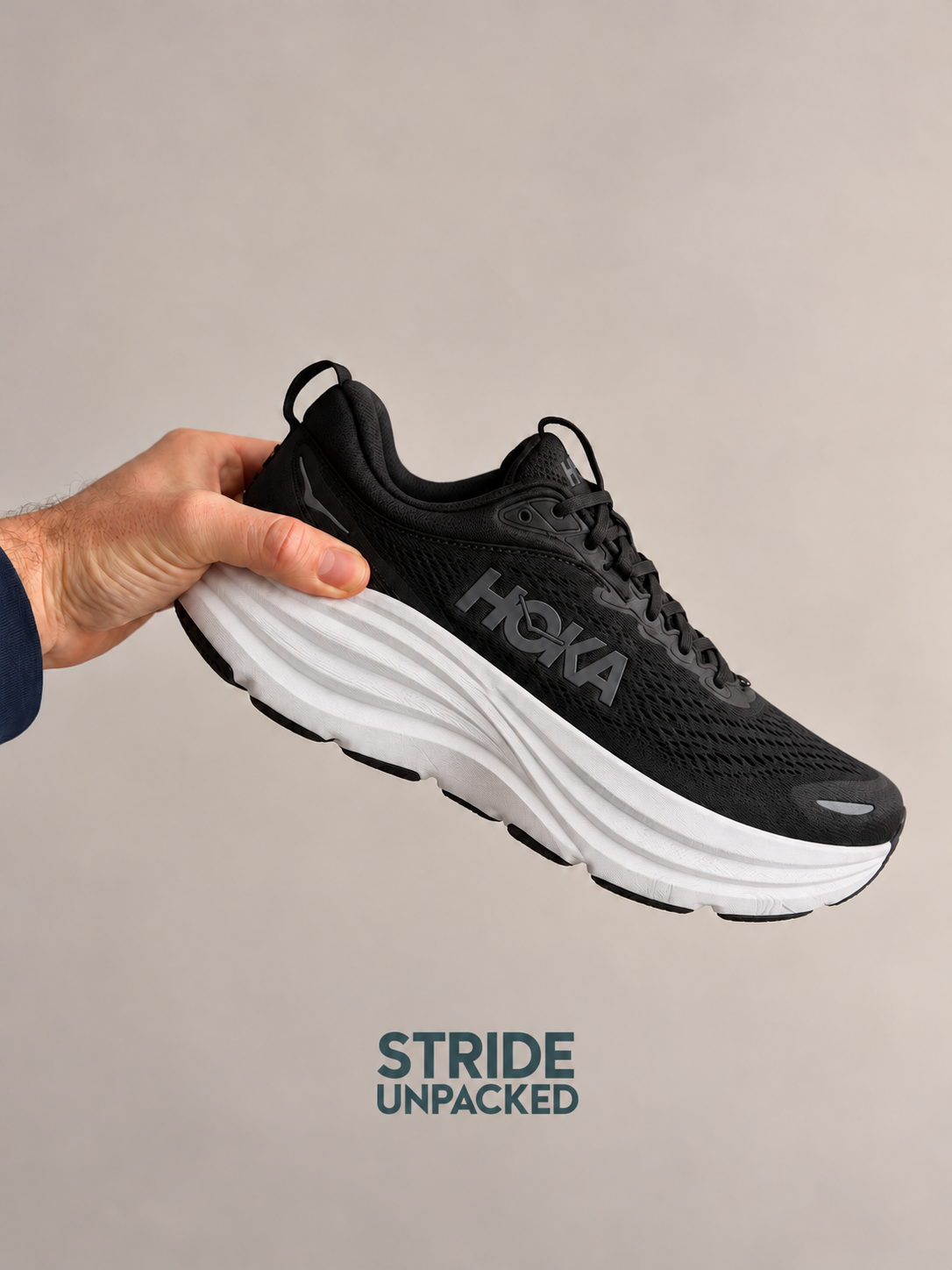
The HOKA Bondi 9 is one option I consider for suitable patients, particularly those spending long periods walking or standing.
My recommendations draw on clinical assessments and patient feedback. I have not personally worn the Bondi 9, and I do not regard it as the best choice for every foot.
Read my HOKA Bondi 9 review: why I recommend it for some patients with plantar fasciitis for the features I value, its limitations and who it may suit.
The review contains clearly labelled Amazon affiliate links. I have no commercial relationship with HOKA.
Does the shoe need room for an insole?
If you use an orthosis or insole, try the shoe and device together.
In clinic, we check whether the chosen insole fits properly. Where the shoe has a removable liner, removing it can create space for the prescribed device.
Adding an insole on top of an existing liner can sometimes lift the foot too high, crowd the toes or affect how securely the heel sits. NHS guidance highlights removable liners and adequate shoe depth when accommodating orthoses. [2]
The device also needs to suit the activity. A football boot, for example, may not accommodate the same thickness or shape as an everyday trainer.
Sometimes we need to choose a different shoe or adapt the insole. The aim is a useful combination that the patient can comfortably wear.
Read our guide to insoles for plantar fasciitis for more on how I make those decisions.
Do I have to wear trainers all the time?
I try to make footwear advice fit someone’s life.
A patient may be happy wearing trainers for work and walking but want a different shoe for a wedding or evening out. We should discuss that rather than give advice they will never follow.
I focus on the activities and periods of the day that are provoking symptoms, then discuss realistic changes.
For slippers and sandals, I would apply the same questions about fit, cushioning and how securely they stay on. During plantar fasciitis symptoms, NHS advice recommends avoiding flip-flops, backless slippers and walking barefoot on hard surfaces. [1]
The most useful footwear is often the pair that makes everyday activities more comfortable and feels practical enough to keep wearing.
What should I check before buying?
Use these questions to guide the decision:
- Purpose: What activity or symptom am I hoping this shoe will help?
- Fit: Is there adequate space around my toes without slipping at the heel?
- Comfort: How does it feel when I stand and walk?
- Insoles: Does it accommodate my prescribed device without crowding?
- Practicality: Will I wear it for the activities that matter?
- Returns: Can I try it indoors and return it under the retailer’s conditions if it does not suit me?
Try shoes with the socks you normally use. If they feel wrong when you try them, do not rely on breaking them in to make the fit suitable. [2]
When is changing footwear not enough?
A more comfortable shoe may help you do more, but it does not establish why your heel hurts.
If footwear changes are not helping, I would rather reassess the problem than keep recommending another purchase. We may need to review the diagnosis, daily activity, rehabilitation or whether an insole has a role.
For an example of my approach to rehabilitation, read our guide to heel raises for plantar fasciitis.
NHS guidance recommends seeking assessment if pain is worsening, keeps returning, interferes with normal activities or has not improved after two weeks of self-care. Seek advice if you have tingling or reduced sensation, or diabetes with foot pain. [1]
Keep building your understanding
Heel pain in the morning: is it plantar fasciitis?
Can I keep walking with plantar fasciitis?
Do insoles help plantar fasciitis?
HOKA Bondi 9: my clinical perspective
This article combines my clinical experience with published guidance. It provides general education, not an individual diagnosis or treatment plan.
Sources & further reading
[2] Guy’s and St Thomas’ NHS Foundation Trust: Choosing shoes to reduce foot pain
This is general education, not a personal diagnosis or an individual treatment plan. Read our health information disclaimer.