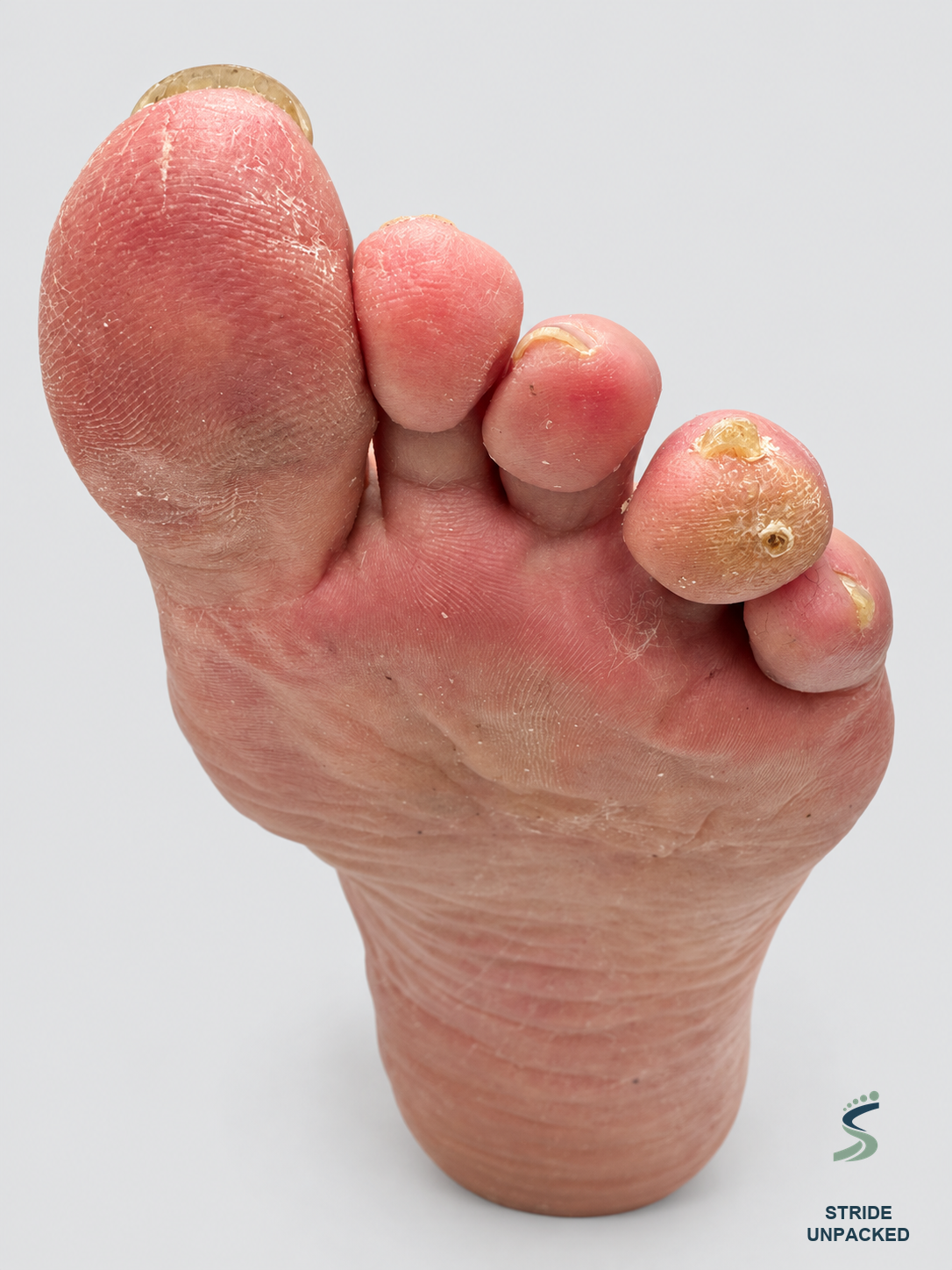
Skin & Nails / REVIEW
Leather vs Silicone Toe Props: A Podiatrist’s Review
Anne Stewart compares the chamois leather and silicone toe props she uses in clinic: comfort, fit, cleaning, durability and what patients can realistically expect.
Why I Recommend Toe Props
Toe props are one of those simple devices I genuinely value in clinic. When the end of a curled toe is taking too much pressure, the right prop can make walking feel more comfortable.
I often wish people would come for advice sooner, before rubbing and painful corns start interfering with their walks. Early assessment gives us an opportunity to address pressure; it does not mean a prop will stop a toe deformity progressing or permanently straighten it.
Over the years I have recommended different leather and silicone props. The two linked below have become my preferred options in more recent years, based on the results I see in clinic and the positive feedback patients give me.
Leather or Silicone: Which Do I Prefer?
Honestly, I do not have a clear favourite between the two.
In my clinical experience, patients can do well with either. They often describe both as comfortable, and the choice frequently comes down to personal preference and the fit of the particular device.
That is different from saying the materials have been proved to perform identically. My recommendation comes from prescribing them and hearing how patients get on, rather than a controlled comparison of these two products.
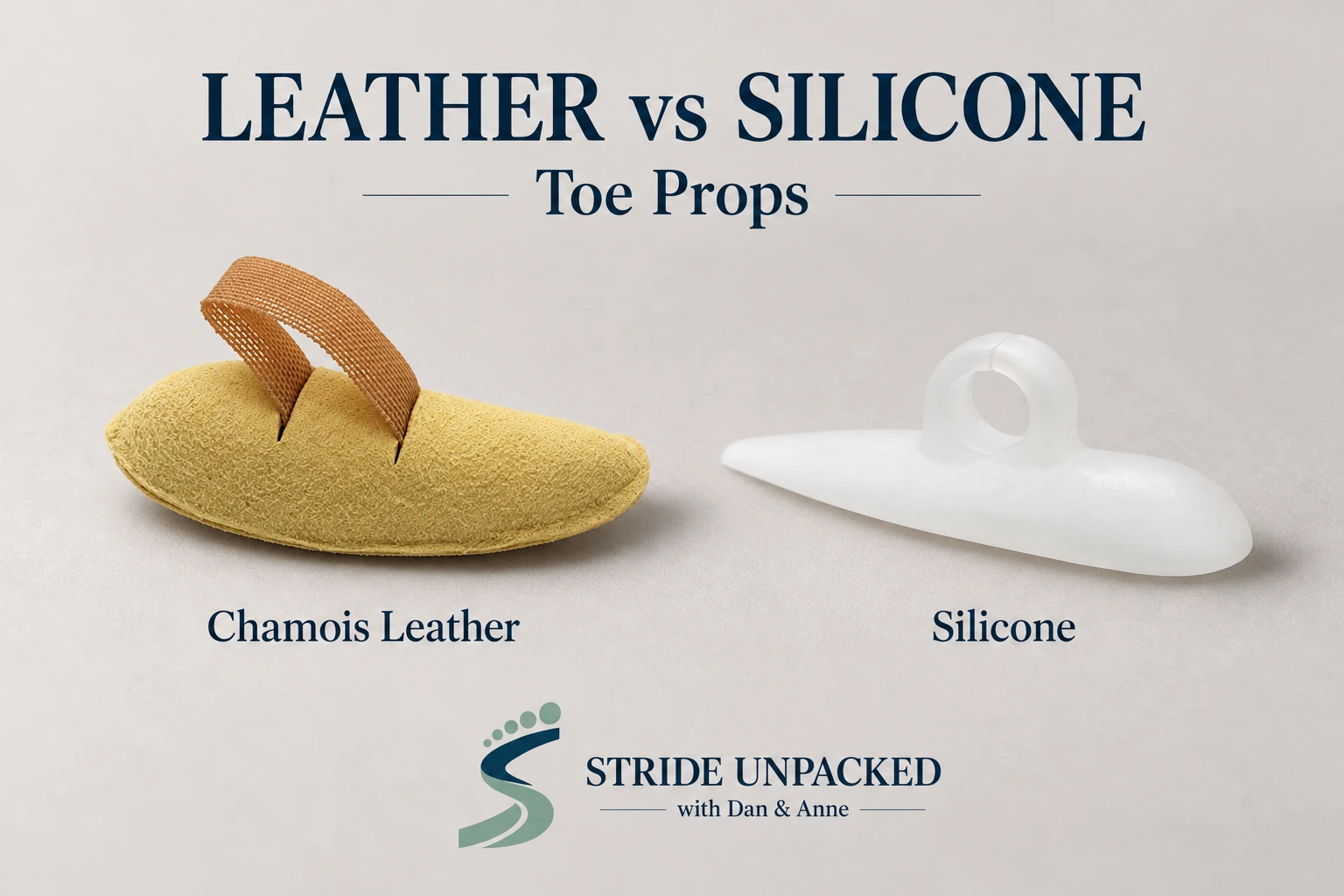
Chamois Leather
This is the option for someone who prefers the feel of a leather-covered prop. It is removable and reusable. My usual cleaning advice is to wipe it with a damp cloth and allow it to dry fully before wearing it again, following the supplied care instructions.
Silicone
This is an alternative for someone who prefers silicone. For the silicone prop I use, I advise cleaning it in lukewarm soapy water and leaving it to dry fully before reuse, again following its care instructions.
I do not choose one purely because of the material. I want to know how it sits beneath that person's toes and how it feels in their footwear.
What Does a Toe Prop Actually Do?
A toe prop sits beneath the smaller toes and helps support them, with the aim of redistributing pressure away from their tips.
For someone with a hammer, claw or mallet toe, that pressure relief may help with discomfort and recurring areas of hard skin. It is not a device for forcing a stiff toe straight, and it does not remove a corn by itself.
Our guide to painful corns explains why treating the skin and addressing the pressure are connected parts of care.
What Feedback Do Patients Give Me?
Patients commonly tell me there is less pain at the tip of the toe, that walking is more comfortable and that they feel happier going out for their walks again.
They can sometimes notice a change quite quickly when the prop is put into position, because the way pressure feels has changed. Some also report that their corns become less troublesome over time.
Those are observations from my clinic, not a promise that everyone will get the same result. Immediate comfort also does not prove that a prop is reducing pressure enough in every part of the foot.
What Does the Research Say?
A small study of 22 people compared leather, gel and individually moulded silicone props. Gel and silicone significantly reduced pressure at the second-toe tip compared with no prop; the leather condition did not show that significant reduction. Comfort scores did not reliably track measured pressure. [1]
The study did not test this exact pair of retail products, and a custom silicone mould is not interchangeable with every ready-made silicone prop. It supports checking the effect of the chosen device, rather than assuming that all props perform equally or that comfort alone tells the whole story.
How Do I Choose the Size and Fit?
Some props come in one size, while others offer small, medium and large options. Many are shaped specifically for the left or right foot, so check the version you are buying.
A toe loop helps hold the prop in place. With the designs I use, it commonly sits around a middle toe, but the correct position depends on the particular product and the person's foot. Follow the fitting instructions and ask your podiatrist if unsure.
When the toe prop is worn properly, I haven't had any complaints of slipping.
The loop should not feel tight or leave the toe sore. Stop using the prop and seek advice if it causes rubbing, persistent marks, numbness, colour changes or increased discomfort.
Will It Fit Inside My Shoes?
In my experience, these props have worked well in footwear with a roomy, rounded toe box and enough depth for the toes and the device.
If a prop makes a shoe feel cramped, check both the shoe and the prop. It does not automatically mean the shoe caused the original problem, but there must be enough room to avoid creating another pressure point.
I would not try to squeeze a prop into footwear that already presses on the toes.
Should I Wear It All Day and Night?
My usual advice is to wear the prop during daytime standing and walking, and remove it at night. It is not something I recommend leaving on continuously for 24 hours.
The wearing plan should suit the patient and the device. Take it off to clean it and check the skin.
I would be particularly careful if someone cannot reliably put it on, remove it or check their toes. For a person with dementia, for example, we need to consider whether a carer can help with that routine.
People with diabetes, poor circulation, reduced sensation or broken skin should seek professional advice before using a toe prop. Comfort is not a reliable safety check when feeling is reduced. [2]
How Long Do They Last?
I usually find patients get a good period of use from these props, but I would not promise a fixed lifespan. Wear, activity and care all make a difference.
Look for flattening, loss of shape or damage. Silicone may eventually crack. Those are reasons to replace the prop or have its fit checked.
Do not wait for obvious damage if the prop no longer feels helpful or symptoms return. Sometimes the foot, footwear or pressure problem needs reassessing.
My Verdict
For the right patient, I think both are useful, reusable options. I do not recommend spending time searching for a universal winner between leather and silicone: the more useful question is which one fits your toes, footwear and routine.
My aim is to help patients walk more comfortably. A prop is one part of that plan, alongside appropriate footwear and care for any painful skin lesions.
Products Mentioned
I stock, sell and recommend both products in my clinic. Neither manufacturer has paid me, supplied free products or provided a promotional code. This review reflects my clinical experience and patient feedback.
Advertisement — Amazon affiliate links. As an Amazon Associate, we earn from qualifying purchases.
View the Chamois Leather Toe Prop on Amazon
View the Silicone Toe Prop on Amazon
Check the size, left- or right-foot option and current product instructions before buying. Ask your podiatrist if you are unsure which device is suitable.
Keep Building Your Understanding
Not sure which toe joints are affected? Read hammer, claw and mallet toes explained for the difference between flexible and fixed toes and the wider treatment options.
Read why painful corns keep coming back, or explore our foot and lower-limb guides.
This review provides general information and cannot replace an individual assessment or treatment plan. Read our health information disclaimer.
How I tested it
I have 21 years of podiatry experience and have recommended different toe props over that time. These two have become preferred options in more recent years. This review is based on prescribing, stocking and recommending them in clinic and on patient feedback—not a controlled trial or a personal wear test.
What works well
- Both are options I use to help manage toe-tip pressure discomfort.
- Patients often report more comfortable walking.
- Removable, cleanable and reusable.
- I have not had complaints of slipping when fitted properly.
Things to consider
- Size, foot side and footwear space need checking.
- They do not permanently correct a fixed toe.
- They need routine removal and skin checks.
- Flattening, cracking or loss of benefit calls for replacement or reassessment.
Sources & further reading
1. The effect of three different toe props on plantar pressure and patient comfort
This is general education, not a personal diagnosis or an individual treatment plan. Read our health information disclaimer.