Heel & Foot / READ
Is It a Bunion or a Bony Lump? Why Your Big Toe Joint Looks Different
Dan Broadhead explains bunions, how severity differs from pain, what footwear and supports can realistically do, and when to consider surgery or seek urgent advice.
“I think I’m getting a bunion. Can I stop it getting worse?”
That is one of the conversations I have in clinic. Another is: “I’ve had this bunion for years, but now it’s bothering me.” Sometimes the concern is pain inside the joint. Sometimes it is pressure from a shoe against a foot that has changed shape.
Those are different starting points. My job is to establish what has changed, what is causing discomfort and what would help that person keep doing the things they enjoy.
Is Every Lump at the Big Toe Joint a Bunion?
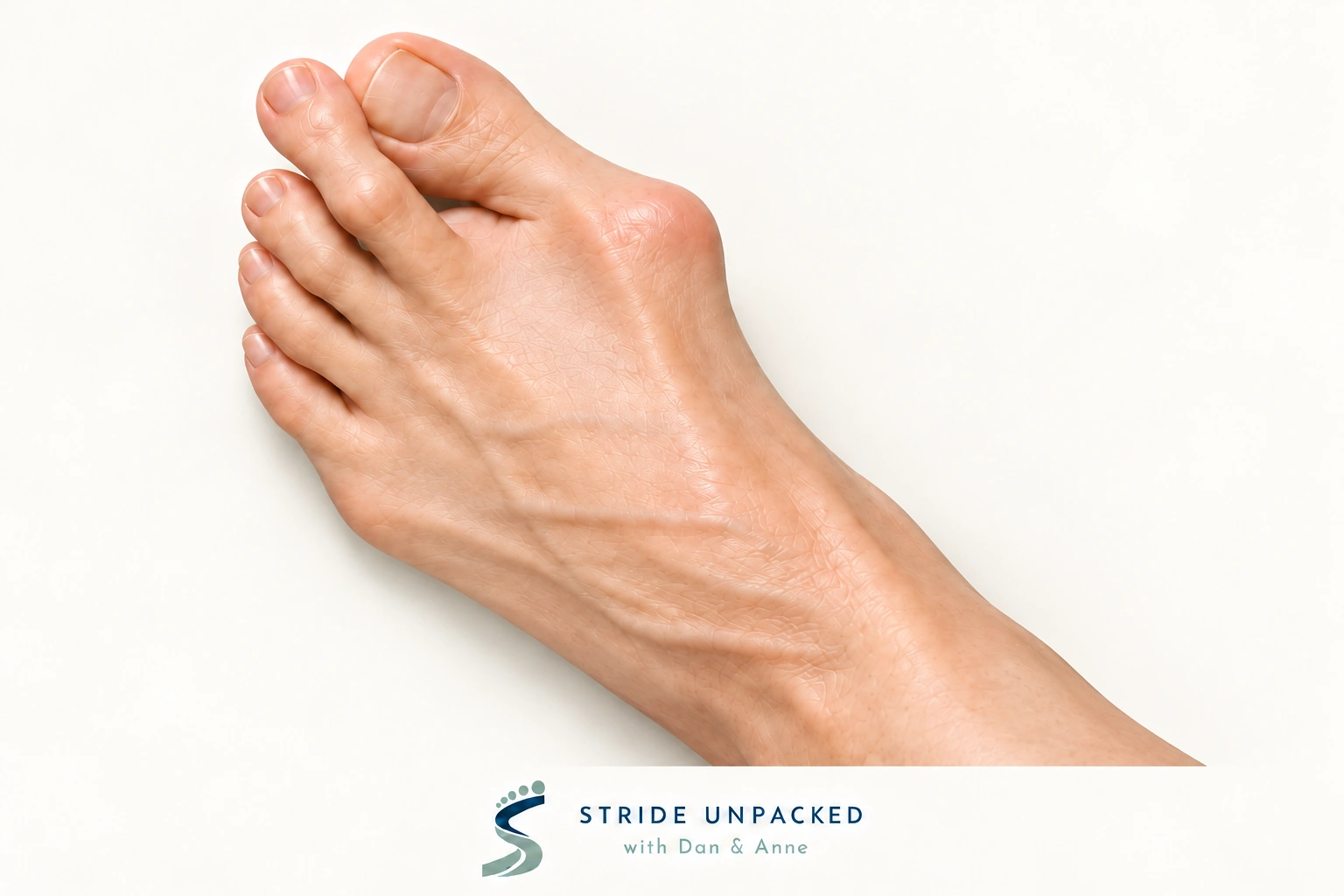
No. A bunion involves a change in alignment at the base of the big toe, usually with a prominence on the inner side of the foot. The clinical term is hallux valgus, also called hallux abducto valgus. The big toe angles towards the smaller toes; rotation can be part of the deformity too. [1]
A bony prominence associated with arthritis can look similar, particularly when it develops around the first metatarsophalangeal joint—the big joint at the base of the toe. If the toe is straight but the joint is stiff and has a bony lump, that needs a different assessment from simply calling it a bunion.
In clinic, I look at alignment and movement separately. Some patients have a bunion with plenty of movement. Others have a straight toe that is painful and restricted. The two problems can also occur together.
My article on hallux limitus and hallux rigidus explains painful, stiff big-toe joints in more detail.
Why Do Bunions Develop?
There is not one explanation that fits everyone. Inherited foot characteristics, the way the foot functions, footwear and some underlying conditions can contribute. [1]
Family history is something I hear about frequently: “My mum had these,” or “My grandparents’ feet looked like this.” I think of this as inheriting characteristics that may make someone more susceptible, rather than inheriting an inevitable outcome.
I also consider muscle function and the history of the joint, including previous injury. The abductor hallucis is one of the muscles involved in controlling the big toe. However, it would be too simple to say that weakness in one muscle explains every bunion, or that strengthening it will reliably prevent one.
Footwear matters, but I do not want patients to feel blamed. I see people who have worn narrow shoes for years without developing a bunion, and others who develop one despite careful footwear choices. That does not mean shoes have no influence. A narrow, pointed toe box can crowd the toes and aggravate pressure against an existing prominence. [1]
Are There Different Stages of a Bunion?
There are recognised ways to grade severity, but not one universal set of numbered stages used in every clinic. For example, the validated Manchester Scale grades appearance as none, mild, moderate or severe. Clinicians may also use measurements from weight-bearing X-rays when assessing alignment and planning treatment. [1,2]
The four descriptions below are how I explain the range of changes to patients. They are a practical clinical explanation, not the Manchester Scale or a diagnostic test you can use from a photograph.
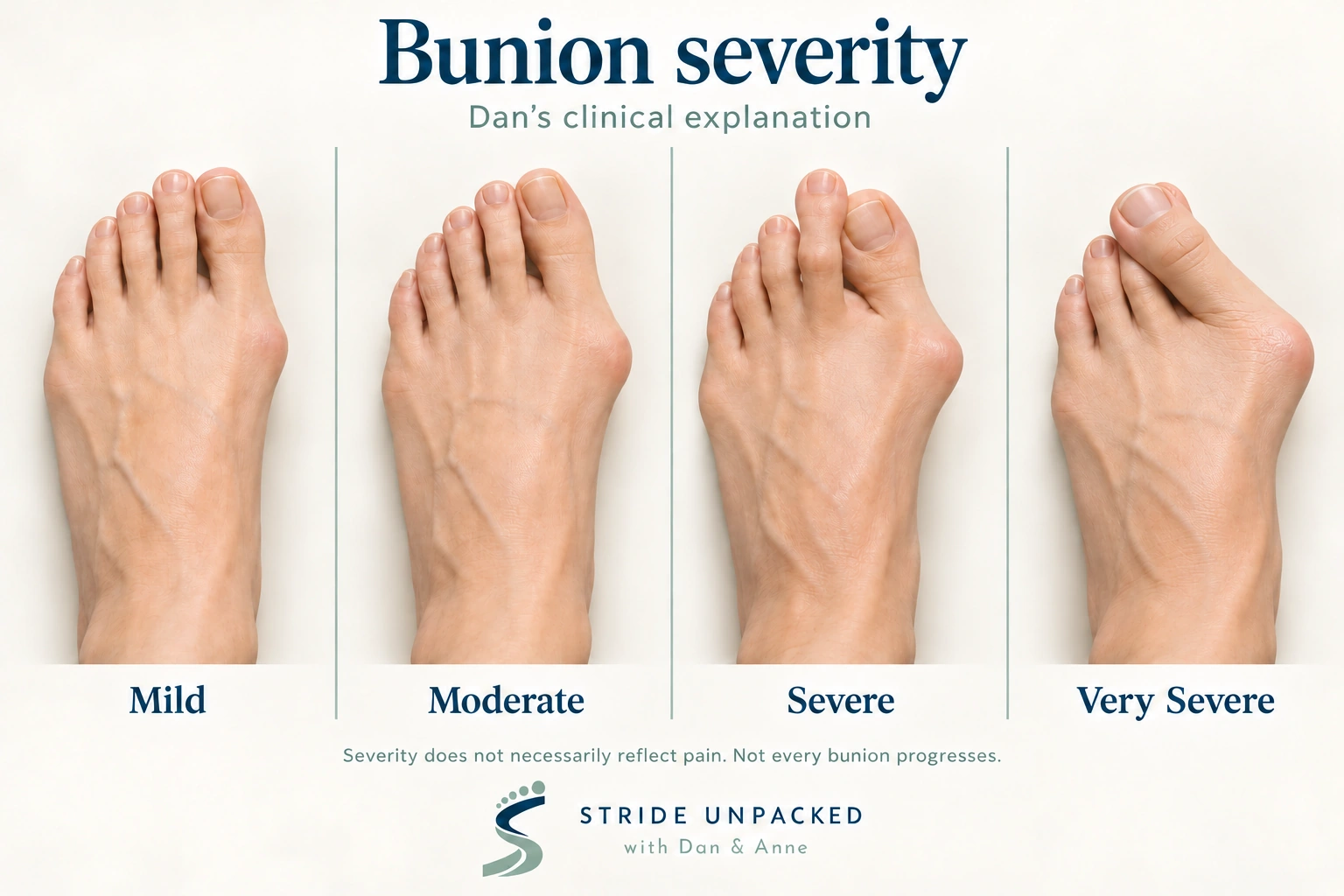
Mild
There is a slight drift of the big toe towards the smaller toes, sometimes with a small prominence at its base. The patient may have noticed a change without having pain or difficulty walking.
Moderate
The deviation and prominence are more noticeable. Shoes may begin to press on the area, and some people notice discomfort when the joint moves. Others remain comfortable.
Severe
The big toe crowds or begins to overlap the second toe. The second toe may lift or develop a hammer-toe position, and the way pressure is distributed across the forefoot can change.
Very Severe
There is substantial deformity, sometimes with the big toe passing above or below the second toe and changes in the other smaller toes. Finding comfortable footwear may become much harder. Joint degeneration can coexist, but cannot be diagnosed from appearance alone.
These descriptions are not an inevitable sequence. People do not all progress at the same rate or reach the most pronounced deformity.
In my experience, a small bunion can be very painful while a much larger one causes little discomfort. The appearance or angle alone does not tell me how much help someone needs. My priorities are pain, skin health, comfortable footwear and function.
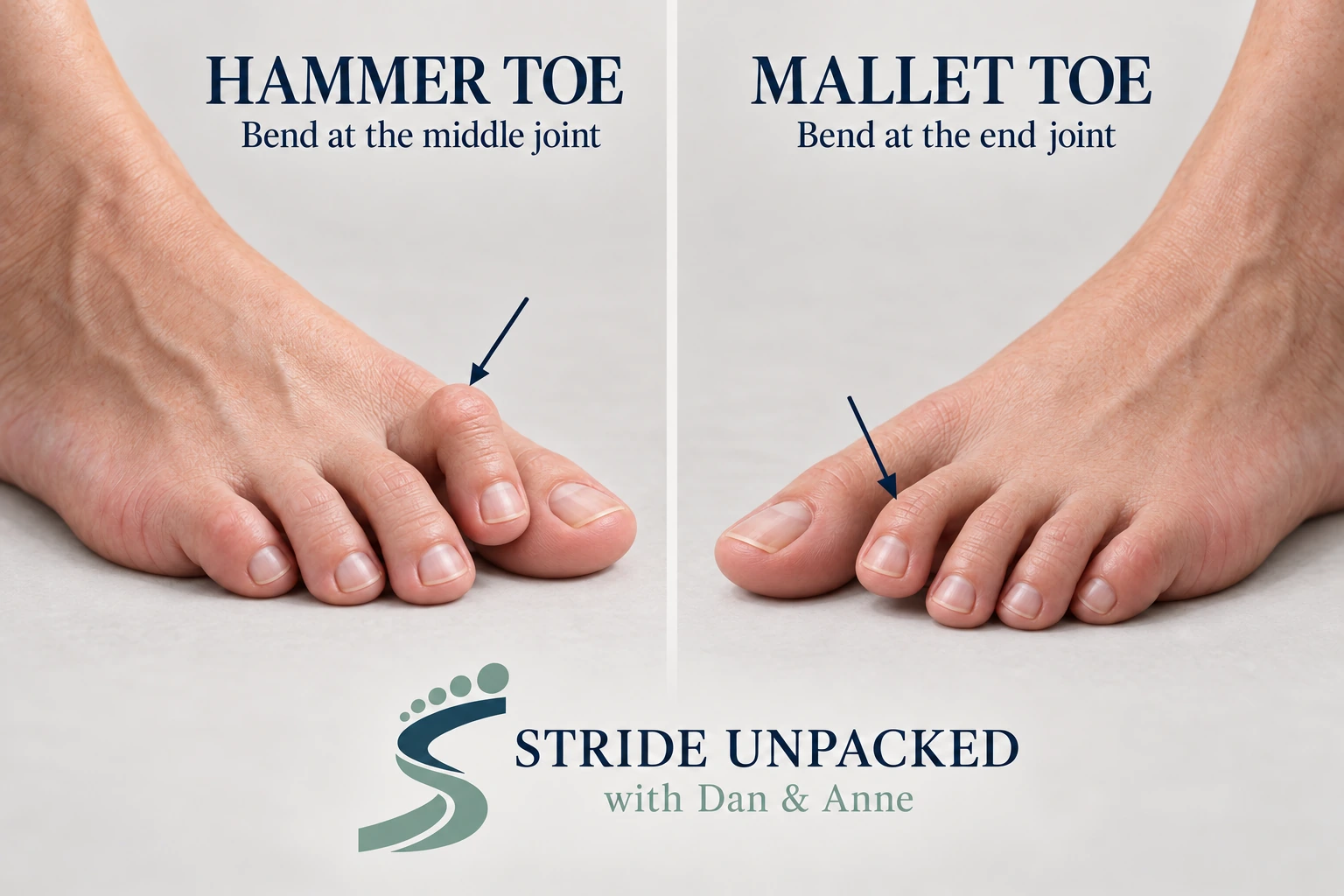
Anne’s guide to hammer, claw and mallet toes explains the smaller-toe changes that may accompany a bunion.
Is the Pain From Shoe Pressure or the Joint Itself?
This distinction often guides my advice, although both can contribute at once.
I inspect the skin and the shoes. Is there rubbing over the prominence? Hard skin or a corn? Does the upper bulge around the joint? I also gently assess movement and tenderness, rather than relying on one finding to make a diagnosis.
If movement is comfortable but contact against the side of the joint is sore, pressure relief may be the main priority. If moving the toe or pushing off during walking hurts, I also investigate the joint itself. A wider shoe may reduce rubbing without fully addressing painful movement.
A sudden change needs particular attention. Gout, infection and injury should not be dismissed as “just the bunion”.
What Can I Try Before Considering Surgery?
Make Space for the Foot You Have
I usually start with footwear that accommodates the forefoot: adequate width and depth, a low heel and an upper that does not press on the prominence. Do not judge fit from the size label alone. [3]
A well-fitting open shoe may be comfortable for some people, provided its straps do not cross the sore area and it remains secure. Protective padding can also help, but extra material inside an already tight shoe can increase pressure. I check the fit with the padding in place.
Reduce Painful Bending When Appropriate
If painful joint movement is part of the problem, I may suggest a suitable rocker sole or a stiffer sole. The aim is to reduce the amount of bending required during walking. The shoe still needs enough room for the bunion and must feel stable.
For selected patients, I may consider an orthosis with a Morton’s extension—a stiffer section beneath the big toe. That is an individual treatment choice, particularly when stiffness or arthritis accompanies the bunion; it is not something every bunion requires.
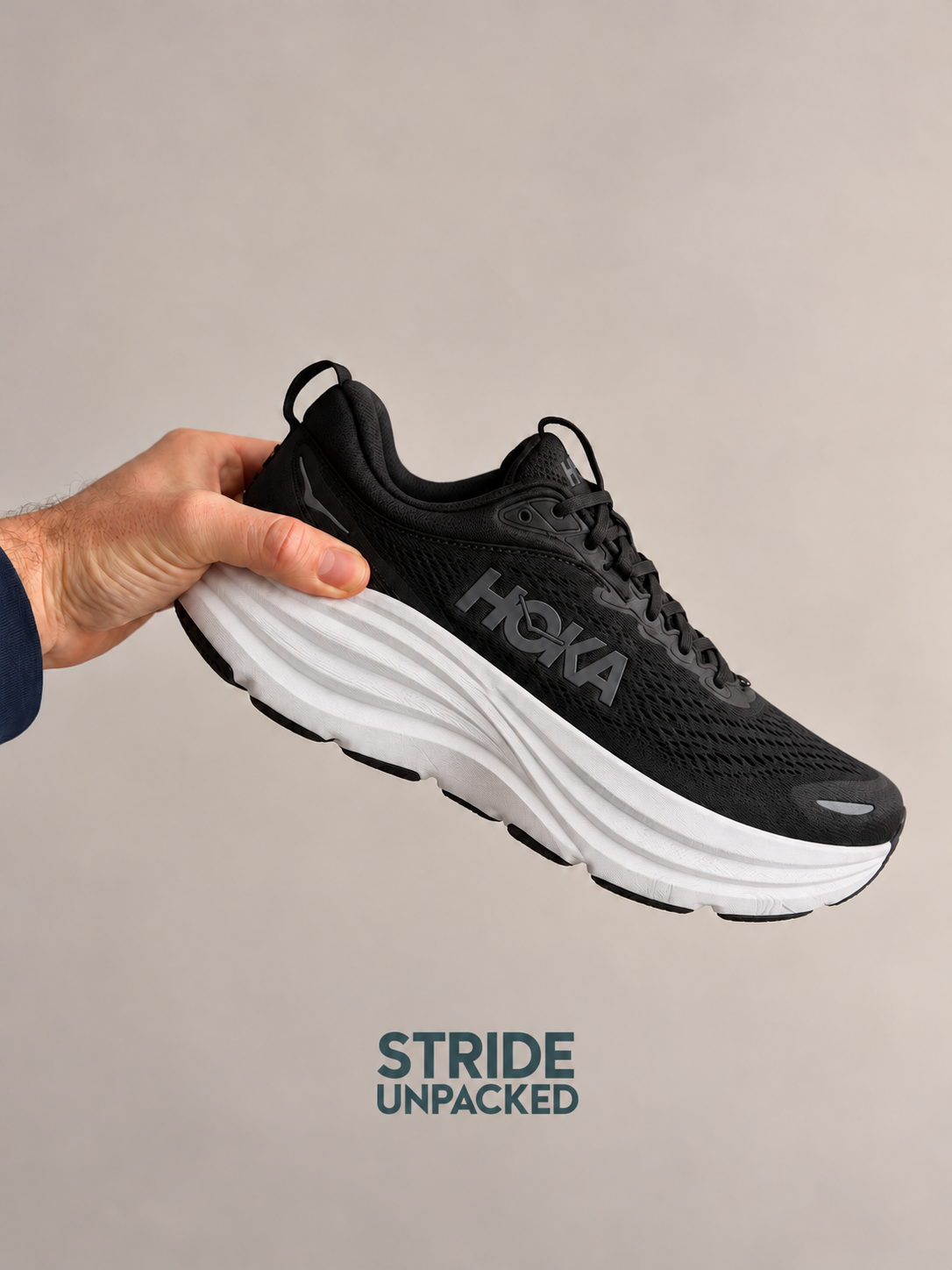
My big-toe joint article covers those options. My HOKA Bondi 9 review discusses one shoe I recommend in clinic, mainly for plantar heel pain. It is not evidence that a particular trainer corrects bunions, and its fit will not suit everyone.
Use Exercise With Realistic Expectations
For some patients with early changes, I recommend exercises that encourage control and strength around the big toe, including gently moving it away from the smaller toes. I want people to feel involved in managing their feet, but that must come with an honest explanation of what we know.
Exercise and toe-separator programmes have been studied in clinical trials. Some studies report improvements in symptoms, function and alignment measurements, but the evidence is limited and does not establish that an exercise programme reliably prevents long-term progression or permanently reverses a bunion. [4]
I would tailor exercises to the examination rather than ask someone to force a stiff or painful joint into a straighter position.
Do Toe Separators and Bunion Correctors Work?
A toe separator can hold the big toe in a different position while worn. In my clinic, its most useful role is often symptom relief: does that change make the foot more comfortable?
When the separator is removed, the toe may return to its previous position. I would not promise a lasting correction. Evidence of some improvement in selected patients does not justify claims that an online device will “fix” every bunion. [4,5]
I am cautious about bulky correctors that are uncomfortable or expensive. Before buying, ask what you want the device to achieve and whether it fits comfortably inside your footwear. A useful support should not create new pressure, numbness, rubbing or skin damage. Stop using it and seek advice if it does.
People with diabetes, reduced sensation, poor circulation or fragile skin should get individual advice before trying devices. Do not force a rigid toe into position.
Toe separators for the big toe are also different from the props Anne discusses in her leather versus silicone toe-prop review. Those support curled smaller toes; they are not interchangeable bunion treatments.
What About Medication or Joint Injections?
Where appropriate, medication may help manage symptoms. If there is a separate painful, inflamed or arthritic joint problem, a clinician may consider a corticosteroid injection after assessment. That does not straighten a bunion or remove the need to address repeated irritation.
Medication and injections need an individual discussion of suitability, risks and alternatives. A suspected infection must be assessed urgently, not treated as an ordinary bunion flare-up. You do not have to try every medication or have an injection before a surgical opinion is appropriate.
When Is Bunion Surgery Worth Discussing?
I would usually try suitable conservative measures first. If pain or difficulty walking and wearing appropriate shoes remains unacceptable, a surgical assessment is a valid next step. Referral is an opportunity to discuss options, not a commitment to an operation. [5]
The reason for treatment and the person’s expectations matter. I have seen patients who describe surgery as life-changing, and others who have been disappointed. Those are clinical observations, not a guarantee that a particular type of pain predicts the result.
Persistent painful rubbing is not merely a cosmetic concern. Both pressure-related pain and joint symptoms can warrant assessment when other measures have not helped. Surgery purely to change appearance is a different decision.
Ask the surgeon:
- Which procedure is suitable for my particular joint and alignment?
- What improvement in pain and function is realistic?
- When can I walk, drive, work and return to my activities?
- What footwear restrictions and support will I need?
- What are the risks, including persistent pain, stiffness, infection, recurrence and further surgery?
Recovery depends on the operation and the patient. Some procedures allow protected heel or partial weight-bearing in a special shoe; others need greater restrictions. Swelling can persist for months. Follow the surgical team’s plan rather than assume everyone has the same recovery. [6]
When Should I Seek Urgent Advice?
Seek urgent medical assessment for a suddenly painful, hot or swollen big-toe joint, especially if pain is increasing, you feel unwell or have a fever. Gout can first appear here, but infection can look similar. Contact your GP urgently or NHS 111 rather than waiting for a routine bunion appointment. [7]
Broken skin, a new ulcer, discharge or spreading redness also needs prompt assessment, particularly with diabetes, poor circulation or reduced feeling. Redness can be less obvious on darker skin. Do not wait for pain if sensation is reduced.
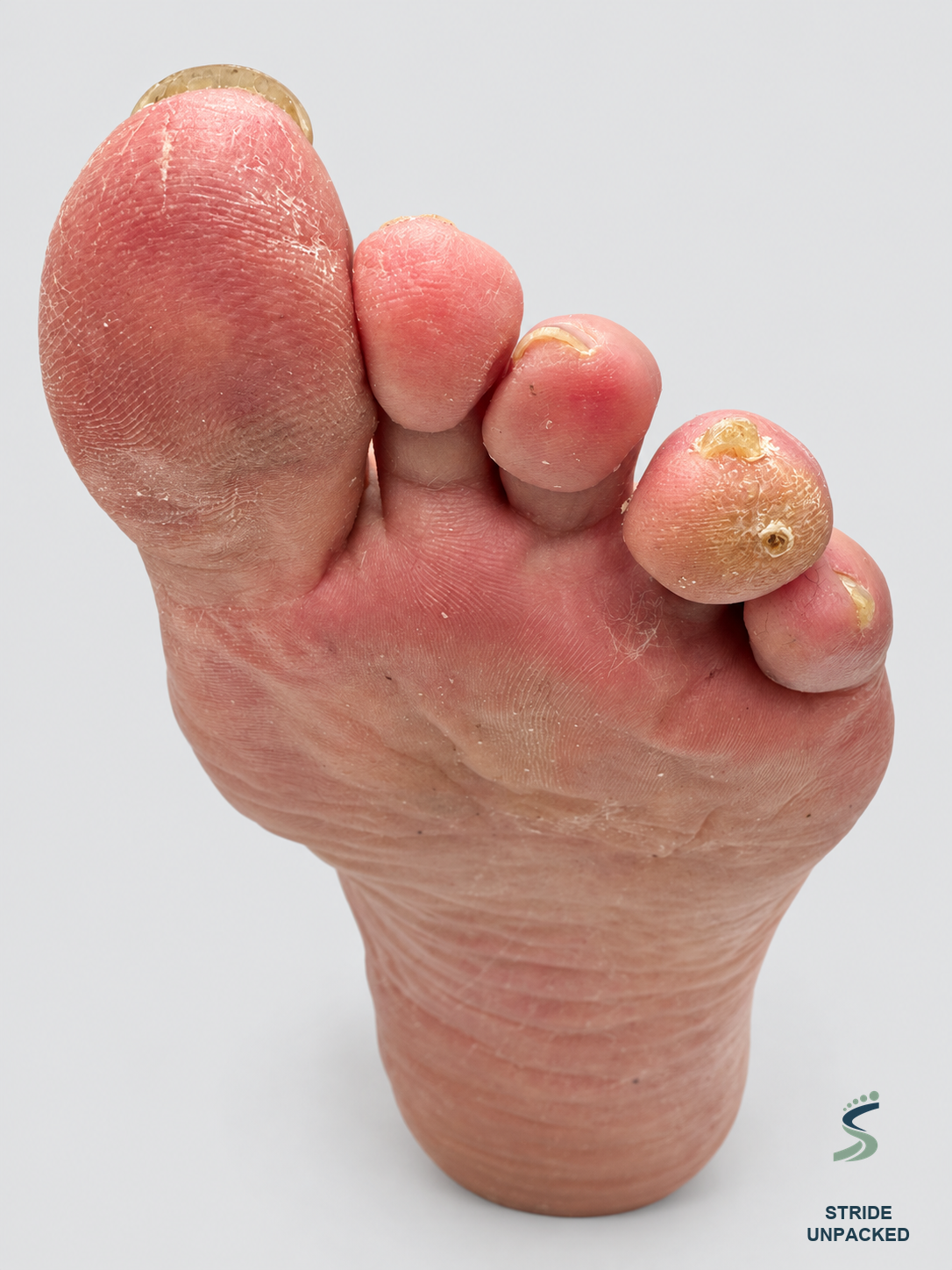
Pressure over a bunion can cause hard skin or a corn, and skin beneath a pressure area can break down. Not every corn becomes an ulcer, but a wound needs assessment and pressure relief. Do not cut it yourself or apply a medicated corn plaster to damaged skin. Anne explains recurring pressure problems in her article on painful corns.
What Is the Main Thing to Remember?
A bunion is more than a bump, and a bump is not always a bunion.
Find out whether discomfort is coming from pressure, joint movement or another cause. Then choose a plan that helps you walk comfortably and protects the skin. Exercises and supports may have a role, but they should not be sold as a guaranteed cure or a promise that progression will stop.
My aim is to help you maintain function and manage pain—not to treat the appearance of your foot in isolation.
Keep Building Your Understanding
Read about painful, stiff big-toe joints, explore Anne’s explanation of smaller-toe deformities, or browse Recommended Kit for the context behind our product recommendations.
This article provides general education and does not replace an individual assessment, diagnosis or treatment plan. Read our health information disclaimer.
Sources & further reading
2. Garrow et al.: The grading of hallux valgus. The Manchester Scale
5. Guy’s and St Thomas’: Bunions
6. University Hospitals Sussex: Minimally invasive hallux valgus correction
This is general education, not a personal diagnosis or an individual treatment plan. Read our health information disclaimer.